
Seen and heard: Q&A with Stacey Fru
October 22, 2015
Even Hollywood actor Richard Gere disappears on the street
October 22, 2015
Sixto Rodriguez is a singular figure in music history – the supposedly dead artist who didn’t know that he was famous halfway around the world.
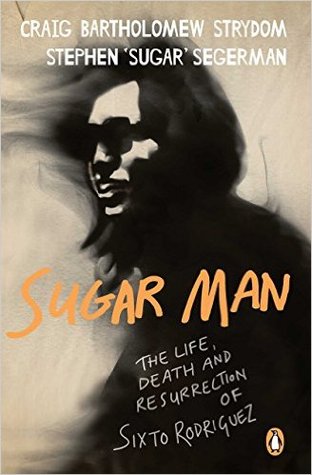 Now two South African fans have recreated his unbelievable story in Sugar Man: The Life Death and Resurrection of Sixto Rodriguez.
The successful search for the enigmatic icon resulted in an Oscar-winning documentary by Swedish filmmaker Malik Bendjelloul. But the two South African fans – record store owner Stephen “Sugar” Segerman and music journalist Craig Bartholomew Strydom – who found Rodriguez living a blue-collar life in Detroit have more to tell…
The documentary about Rodriguez enjoyed incredible success. How does the book differ from the movie?
Stephen: The movie covers the period of the search to his tour in South Africa. The book tells my history, Craig’s history, Rodriguez’s history, how I met [filmmaker] Malik, making the movie, getting to Sundance, the Oscars and what happened to Malik. A lot happened in that time. So it has a lot of information that’s not in the movie.
Not to give away the details, but can you give us a breakdown of the book?
Craig: The movie’s 83 minutes, covering two years of the story. The book covers the whole story. It’s split into four parts. There’s ‘the mystery’ – that’s the story, Sugar, myself and this journey that became a collective journey. Then ‘the man’ and what I would call a biography of Rodriguez. Then there’s ‘the music’ – how the album was released through Light in the Attic records. Then there’s ‘the movie’ and how it was made.
What was it like having this goal – to find out what happened to Rodriguez – and then meeting Malik, who made the movie?
Stephen: There was no internet when this started. And even when there was… People used to think his first name was Jesus. Actually that’s his brother’s name. And when you search the internet for a Jesus Rodriguez, can you imagine what you find [laughs]. It was hard. Making the movie was very hard. There was no crew. It was basically pirate filmmaking.
Malik took his own life in May 2014. How did that affect you guys?
Stephen: What happened to Malik broke our hearts. You know what, the morning I got the email I thought, “I don’t even know why he did it.” To this day, none of us understand and it just ended the project in a way we didn’t want [it to end]. He was the nicest, sweetest guy. Rodriguez was supposed to do music, Malik was supposed to do big things, and Craig and I got to write this book about this incredible story. That’s how it was supposed to end.
Craig: Malik was like Tin-Tin. He had a very special way of thinking. He was able to disarm and unite people.
Stephen: The first time Malik walked into Mabu Vinyl [Stephen’s record store], he reminded you of Tin Tin. He got along with everyone – except pirates – and he was travelling around the world. He’d been working in Sweden when he emailed me to ask if we could do an interview about Rodriguez. When he got to Mabu Vinyl, he walked in and waved. He was always warm and welcoming. His personality was very important because the love he put into the movie came out in the end product. I mean, he had no equipment, no resources and no budget. So his love for the project was a really important ingredient.
How were you able to finish the book, given what happened to Malik?
Stephen: His parents were incredibly kind, thank God. They let us use the email correspondence between him and me for the book.
What attracted you guys to Rodriguez’s music as teenagers?
Craig: We were a very Calvinist society. Many South African boys had to wear a [military] uniform at school once a week to prepare for the army. You couldn’t even dance or buy alcohol on a Sunday. All the TV stations and radio stations were state-owned, except the ones coming from the homelands. We had a police state. But what people didn’t realise is that the minute something like Rodriguez goes underground, it gets passed around. It was an early form of viral [media].
Stephen: It’s a very touchy subject. One school of thought says that Rodriguez spawned an anti-apartheid movement. That’s not true. To young South Africans, this was just a record. It was just an album. In those days, anything mildly controversial got through. You know, Dark Side of the Moon, Woodstock…
Catch Rodriguez on January 29 at the Coca Cola Dome in Johannesburg, or on February 5 and 6 at Grand West’s Grand Arena in Cape Town.