
Transforming fear into hope
April 21, 2022
Dealing with grief
May 26, 2022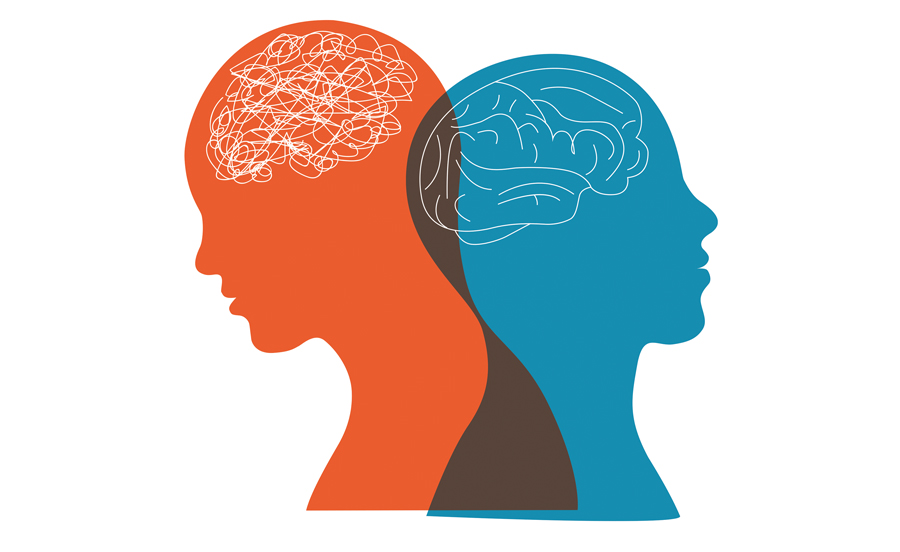
How to flourish
Lost your joy? Are you stuck somewhere between semi-depressed and semi-happy? You could have a case of languishing.
Words: Dr Colinda Linde, Clinical Psychologist, Chairperson of The Scientific and advisory noard for Sadag. Article Originally published In Mental Health Matters Magazine.
I don’t know what’s wrong with me. I don’t feel like I have a full-on depression, but there’s nothing that brings me joy either. I’m just going through the motions every day.”
Does this sound familiar? Not flourishing, not depressed, but drifting along somewhere in-between? After the shock and trauma of 2020, the long- haul effect of the pandemic has caught up with us in the form of something very few had heard of until now – ‘languishing.’
This article will explain what languishing is and why it’s happening, then give practical ways in which you can shift yourself out of this state.
WHAT IS LANGUISHING?
The term was first used by sociologist Corey Keyes in 2002, in a paper exploring mental health (flourishing) or its absence (languishing). It was defined as the antithesis of flourishing at that time, which is interesting in that the economic crash of 2008 had not happened yet, let alone a pandemic. Almost 20 years later, the term is an accurate description of the ‘mood of 2021’.
Languishing is not a mental illness as such, but rather a set of distressing emotions that include joylessness, emptiness, monotony, restlessness and stagnation. If you look and listen around you, it’s becoming more apparent that people are feeling restless, apathetic, unsettled. And there’s also a tendency to have less interest in life or what used to bring us joy. It’s not quite depression but if you have a history of depression and anxiety (or are genetically predisposed) you will tend to be more prone to languishing than others.
Depression and languishing are not the same entities, however. While they can present similarly, there are distinct differences between the two. For example, symptoms of depression include sadness, changes in appetite, feelings of worthlessness and thoughts of death or suicide. Languishing is more about indifference and a lack of joy or fulfilment.
Languishing is not the same as burnout either. Another feature of languishing is quick bursts of energy and productivity, followed by a feeling of ‘what’s the point?’ or ‘why bother?’ and/or fatigue. This makes it look like burnout, but the difference is that there isn’t a progressive exhaustion and demotivation. Rather, there’s a constant feeling of joylessness and demotivation, interspersed with periodic bursts of ‘recovery’ and ensuing activity.
One way to think about languishing is that it’s a sort of middle-child of mental health – the void between depression and flourishing, an absence of well-being. You don’t have symptoms of mental illness, but you’re not the picture of mental health either. You’re not functioning at full capacity.
Languishing dulls your motivation, disrupts your ability to focus, and triples the odds that you’ll cut-back on work. It appears to be more common than major depression – and in some ways it may be a bigger risk factor for mental illness.
Part of the danger is that when you’re languishing, you might not notice the dulling of joy or the dwindling of drive. You don’t catch yourself slipping slowly into solitude; you’re indifferent to your indifference. When you can’t see your own suffering, you don’t seek help or even do much to help yourself.
HOW DID THIS HAPPEN?
Languishing may have been first documented in the early 2000s as a term for describing an absence of mental health more than a mental health condition as such, but the term did not feature much in mental health circles until part of the way through 2021 when it started making its way into the media as an attempt to describe the general phenomenon of listlessness, restlessness and joylessness becoming more apparent globally.
As in 2002, there is little known on exactly why languishing happens at all. Part of the reason for this phenomenon could be that we expected 2021 to be better, and different than 2020. After the shock and trauma of 2020, there was quite an expectation on the following year being a return to some sort of normality. However, there was an intense third wave with higher levels of loss – or certainly it felt that way, as we experienced deaths of people known to us, and younger people than before. And there’s still a pandemic, we still can’t mingle or travel freely, we’re still in masks, and despite vaccines being available there are delays (in many countries) in rollout. Even after wading through the overload of information on vaccine efficacy, and deciding whether to go ahead or not (all of which can be exhausting in itself), receiving a vaccine is still no guarantee against getting Covid-19 or that life will be totally normal again. So we’re in a holding pattern, a type of limbo, waiting for life to start feeling like we are living again.