

Exposing Bullying
June 24, 2019
Uproar over fines against homeless
August 22, 2019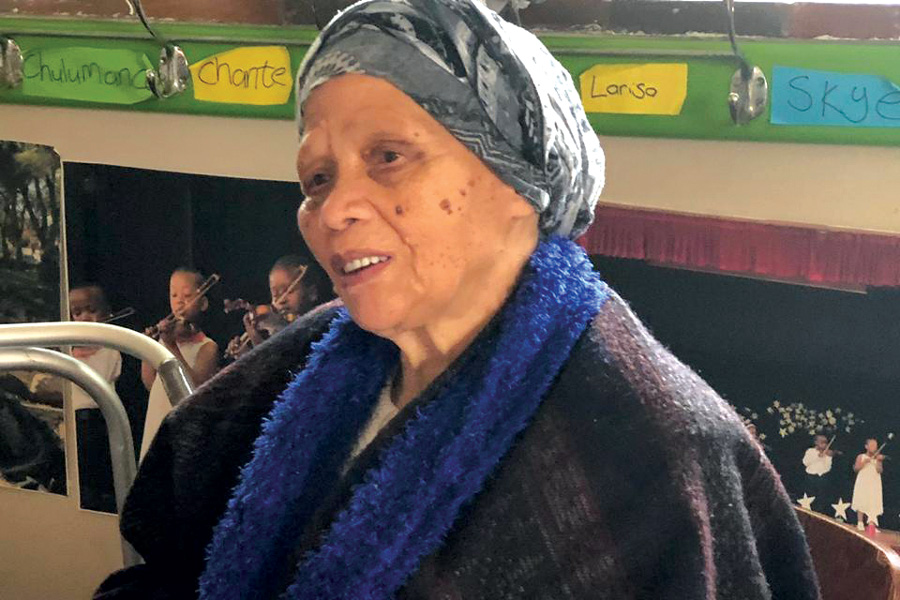
From Tragedy to Triumph
Words: Lungisa Mnqwazi
At the age of 78, a fire still burns in the heart of Maggie Oewies-Shongwe, founder of South Africa’s first labour union, to alleviate the plight of domestic workers. Now retired, she’s still as outspoken as ever on issues of injustice and poverty.
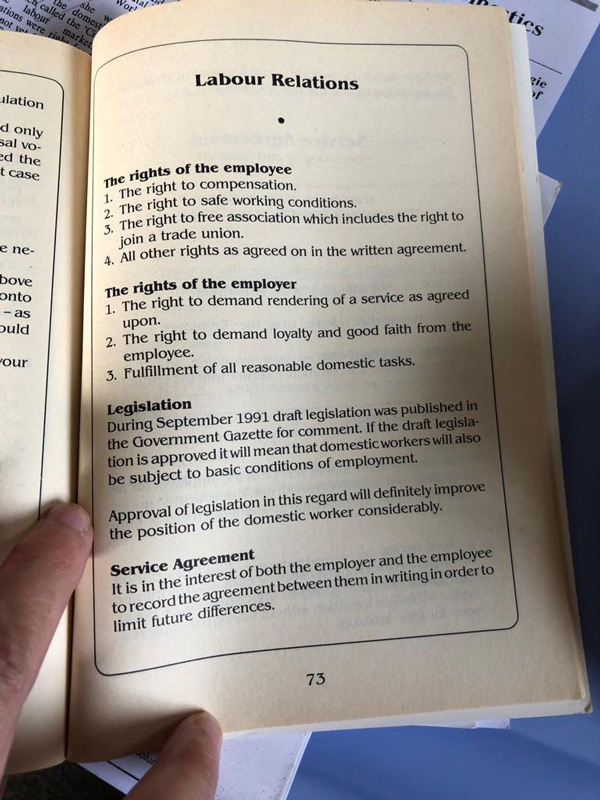

Maggie Oewies-Shongwe became the face of domestic workers in the 1970s when she founded the Domestic Workers’ Association during the height of apartheid.
Born in Namaqualand in 1940, Maggie was raised by her grandparents. As the youngest child in the house, she mostly stayed at home with her grandparents while her older relatives were at work.
Maggie remembers growing up in a disciplined home. Her grandmother was the local midwife and often relied on her help to pin the nappies of newborn babies. She had an inquisitive mind from an early age, and was always the one asking questions. Much to Maggie’s delight, her grandfather was all too happy to listen to her curious conversations.
“A child’s life is one of fantasy. You see the beauty of your life and not the pain that is still to come. Mine was no different,” she says.
Although her father was not always around, as he tended sheep, the two had a special bond. “I was very close to my father. Although was hardly there, when he was there, I was always with him,” she says.
One day, Maggie followed her father into the mountains. She wanted to spend some time with him as it was going to be her birthday soon. Walking up the hill, something caught her father’s attention.
“He must’ve seen people approaching, and told me to hide behind an anthill, no matter what happened. He took out a box of matches and threw it to me.
I didn’t know why he did it, but was proud that he trusted me with it.
“There were four men. They hardly spoke, and they just pulled the trigger. When they heard something, they looked around, and my father signalled for me to stay low. I must’ve sat behind the anthill for quite a while. Eventually, I heard the truck leave,” Maggie recalls.
Only after seeing her father’s lifeless body drenched in blood, Maggie realised her father wanted her to set him alight when the wild animals came. She went to lie down where he told
her to and fell asleep. When she woke up the next morning, his body was still there. She reached for a match and lit a fire, signalling her grandparents.
“That was the most tragic moment of my life. I wouldn’t want any other child to go through that. My grandmother said I slept for two days,” Maggie remembers.
She was too traumatised to attend her father’s funeral, and no one in her family spoke much of that tragic day. At least not to her.